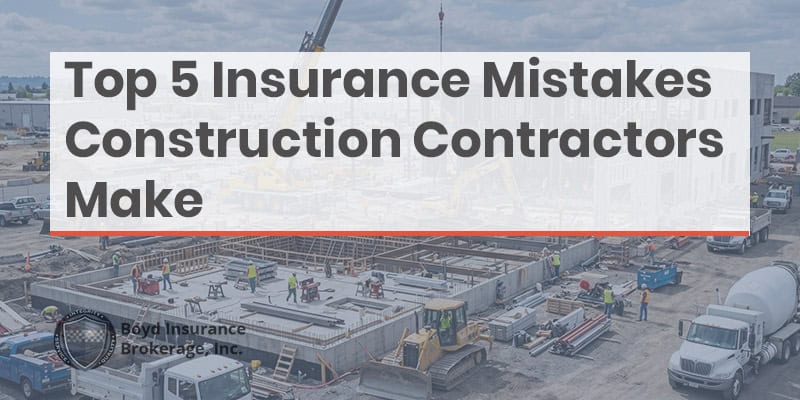
The most common insurance mistakes Washington construction contractors make are carrying only the $250,000 state-minimum general liability, misclassifying employees as 1099 contractors, skipping builders risk coverage, using personal auto policies for work trucks, and failing to verify subcontractor certificates of insurance. Each can lead to denied claims or L&I penalties.
Operating a construction business in Washington involves navigating strict state regulations, tight margins, and significant physical risks. Insurance is your primary financial shield, but a poorly structured policy can leave you exposed to devastating out-of-pocket costs.
Here are the top five technical insurance mistakes we see contractors make in Washington state, and how to avoid them.
1. Carrying Only the State Minimum General Liability
The Washington State Department of Labor & Industries (L&I) requires contractors to carry a minimum of $250,000 in general liability insurance to register. Many new contractors purchase this minimum to save on premiums and get their license.
This is a critical error. The $250,000 limit is rarely sufficient for actual job site risks. Furthermore, almost all commercial clients and most educated residential homeowners require contractors to carry at least $1 million per occurrence. If you only carry the state minimum, you will be disqualified from bidding on most lucrative projects.
2. Misclassifying Employees as Independent Contractors
Washington is a monopolistic state for workers compensation, meaning all coverage must be purchased directly through L&I. To avoid these premiums, some contractors misclassify their workers as 1099 independent contractors.
Washington uses a strict, multi-part test to determine worker status. Simply issuing a 1099 or requiring a worker to have a UBI number does not make them an independent contractor. If L&I audits your business and finds misclassified workers, you will be held liable for unpaid premiums, retroactive taxes, and severe financial penalties. Always classify workers correctly and secure the mandatory L&I coverage.
3. Skipping Builders Risk Coverage
General liability protects you against third-party bodily injury and property damage, such as accidentally dropping a tool on a client’s car. It does not cover the actual structure you are building or remodeling.
If a fire destroys a half-finished home, or if thieves steal $15,000 worth of lumber from your fenced job site, general liability will not respond. Builders Risk insurance, also known as course of construction coverage, is required to protect the physical property, materials, and fixtures while the project is underway.
4. Using Personal Auto Policies for Work Trucks
Many independent contractors use their personal pickup trucks to haul tools, transport materials, and visit job sites. Relying on a personal auto policy for these activities is a direct violation of the policy terms.
Personal auto policies explicitly exclude vehicles used for commercial purposes. If you cause an accident while driving to a job site loaded with company equipment, the insurance carrier will deny the claim once they discover the business use. You must secure a commercial auto policy to ensure your vehicles, liability, and assets are protected during transit.
5. Failing to Collect and Verify Subcontractor COIs
General contractors frequently hire specialty subcontractors, like electricians and roofers, to complete specific phases of a project. A major mistake is allowing these subcontractors on the site without verifying their Certificate of Insurance (COI).
If an uninsured subcontractor causes property damage or injures a third party, the liability rolls uphill to you. Your general liability policy will be forced to respond, which can exhaust your limits and drastically increase your future premiums. Always require a current COI from every subcontractor before they step on the site, and ensure your company is listed as an Additional Insured on their policy.
Review Your Contractor Coverage
A single uncovered claim can bankrupt a construction firm. Contact Boyd Insurance Brokerage Inc at (509) 340-2693 to audit your current policies, identify coverage gaps, and ensure you meet all Washington state L&I requirements.
Frequently Asked Questions
How much general liability insurance do Washington contractors need?
L&I requires a $250,000 minimum to register, but that’s rarely enough — most clients require at least $1 million per occurrence, and carrying only the minimum disqualifies you from many projects. Learn what contractor’s liability insurance covers.
Do Washington contractors buy workers’ comp through L&I?
Yes. Washington is a monopolistic state, so workers’ compensation must be purchased directly through L&I. Misclassifying workers as 1099 contractors can trigger back premiums, taxes, and penalties.
What is builders risk insurance?
Also called course-of-construction coverage, it protects the structure, materials, and fixtures while a project is underway. General liability won’t pay if a half-finished building burns or materials are stolen.
Do I need commercial auto for my work truck?
Yes. Personal auto policies exclude commercial use, so a claim from an accident while hauling tools or materials to a job site will be denied. You need a commercial auto policy.